
How NGOs and Corporates Can Empower Women Through Sustainable Menstrual Hygiene Programs: The Silent Revolution
Five Days That Change Everything
Picture a young woman, full of hopes and dreams, ready to take on the world. But for five days every month, she feels held back—overwhelmed by the fear of leaks, the embarrassment of using worn-out cloth, and the sheer discomfort. She ends up staying home instead of going out to learn, work, or live her life.
This is the harsh reality of period poverty—a quiet, widespread problem that steals away opportunities, confidence, and dignity from millions of girls and women worldwide. Imagine losing nearly two months of your year, not by choice, but because basic menstrual products and support aren’t available.
Beyond the human cost, there’s an environmental crisis too. In India alone, over 113,000 metric tonnes of non-compostable menstrual waste pile up every year, poisoning the planet we all share. But what if there was a better way? What if one simple change could restore dignity for a decade while cutting down waste by more than 99%?
The answer lies in choosing sustainable menstrual health options. Instead of disposable products that constantly add to the landfill and drain wallets, reusable items like menstrual cups, cloth pads, and period panties offer lasting freedom and empowerment. That’s why so many NGOs and corporates are championing these eco-friendly alternatives—they’re not just good for the planet, they change lives.
The Crucial Comparison: Disposable vs. Sustainable
The future of menstrual health is one where every woman and girl can face those five days each month with confidence, comfort, and care—because no one should have to lose time, education, or self-worth over something so natural.
Below is a detailed comparison of the main options, highlighting the trade-offs in Cost and Convenience over a 10-year period:
| Product | 10-Year Cost | Convenience | Environmental Impact |
|---|---|---|---|
| Disposable Pads and Tampons | Highest (Up to $480+) - Requires continuous, recurring monthly expense for 2,000+ units. | High Initial Convenience: Easy to use and dispose of immediately. Low Ongoing Convenience: Must be changed frequently (4-6 hours), requires continuous purchase, and disposal can be an issue in schools/remote areas. |
Worst: Creates thousands of bulky, non-biodegradable plastic and cotton waste units. |
| Menstrual Cups | Lowest ( ~$50) - One-time investment for a product lasting up to 10 years. | Low Initial Convenience: Requires learning insertion/removal, may need practice and access to private running water for rinsing. Highest Ongoing Convenience: Can be worn safely for up to 12 hours, eliminating the need for frequent public changing. |
Best: Near-zero waste, generates 99% less non-biodegradable waste than disposables. |
| Reusable Cloth Pads | Medium ( ~$150) - Initial purchase of a set, plus periodic replacements (every 2-3 years). | Medium Convenience: Familiar external product format, soft and breathable. Moderate Ongoing Convenience: Requires daily washing, careful drying (ideally in sunlight for sterilization), and planning to carry used/wet pads until laundry. |
Excellent: Minimal waste, typically made of natural or recycled fabrics. |
| Reusable Period Panties | Medium-High (~$200 - $300) - Higher initial cost per unit, replaced every 2-3 years. | Highest Initial Convenience: Worn exactly like regular underwear, leak-proof designs offer superior security. Moderate Ongoing Convenience: Requires washing and can take longer to dry than cloth pads due to internal absorbent layers; need multiple pairs for a cycle. |
Excellent: Minimum long-term waste. |
The Game-Changer: A Decade of Dignity
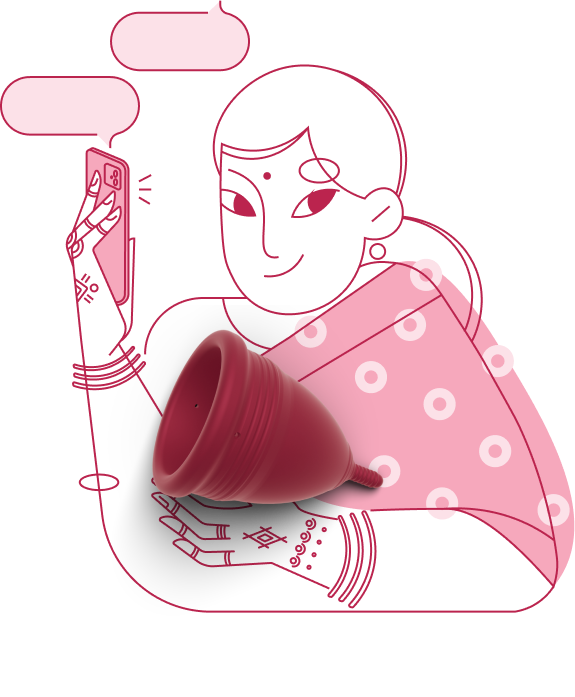
When it comes to long-term choices for menstrual health, nothing beats the menstrual cup. This isn’t just the greenest option—it’s a real money-saver too. Made from safe, non-toxic medical-grade silicone, a single menstrual cup gives you up to ten years of freedom, comfort, and dignity—all in one simple purchase.
There’s a reason manufacturers invest in quality, using processes like injection moulding using Liquid Silicone Rubber. It means each cup is built to last, stays hygienic, and can stand up to years of daily use. For organizations and government programs looking to make the biggest impact, the cup is the answer. It helps women take charge of their periods and cuts down on plastic waste in a way that pads and tampons simply can’t match.
When you choose a menstrual cup, you’re not just making a smart decision for yourself—you’re helping shape a cleaner future for everyone.
| Metric | Disposable Products | Menstrual Cups | Impact |
|---|---|---|---|
| Non-Biodegradable Waste | ~2,400 to 3,000 pads | 1 cup | 99% reduction in non-biodegradable waste. |
| Lifetime Cost per User | High (continuous expense) | Low (one-time purchase) | Cost-saving potential for individuals and NGOs. |
| Protection & Comfort | Needs changing frequently | Safe to use for up to 12 hours | Reduces anxiety, increases mobility and participation. |
Case Studies & Metrics: The Proof of Empowerment
The success of sustainable menstrual hygiene programs is no longer theoretical; the metrics prove that an initial investment yields profound, long-term returns for the individual and the entire nation.
Case Study 1: The Transformative Power of Psychosocial Well-being (Kenya)
Periods can be a tough time for many girls, but the biggest difference comes from how they feel during those days. Studies from rural Western Kenya show that girls who received menstrual cups felt better emotionally and were more focused on their education — with a steady 9% to 10% boost in their overall well-being.
Why? Because menstrual cups offer up to 12 hours of reliable protection and are easy to use. This means these girls no longer had to worry constantly about leaks, feeling embarrassed, or being uncomfortable in class. When a girl can put those worries aside, she’s not just physically present at school—she’s truly engaged and ready to learn and grow.
This shift in confidence and comfort is what really changes the game for girls facing period challenges, helping them stay connected to their education and their dreams.
Case Study 2: Economic Uplift and National Growth (India)
When women can manage their periods confidently and sustainably, it doesn’t just improve their health—it also brings real economic benefits to the whole country. Women who feel comfortable and supported during their menstrual cycles tend to be healthier, more productive, and more involved in the workforce.
For example, a study in Kerala, India, showed that women using menstrual cups experienced noticeable improvements in their participation at work and school. This isn’t just about better menstrual management—it’s about unlocking the full potential of women to contribute actively to their communities and the economy.
When periods don’t hold you back, everyone benefits.
- 91.3% of users reported a clear economic benefit due to eliminating the monthly expense of disposables.
- 55.8% reported improved work particiaption.
- 76.7% reported an improvement in their overall social activity.
When a girl stays in school longer, it doesn’t just change her life—it benefits her whole community and country. Research around the world shows that for every extra year of education a girl gets, especially in low-income countries, her future earnings can go up by about 8% to 10%. That’s a powerful boost.
So, by making sure girls can stay in school and women can stay at work—without being held back by period challenges—sustainable menstrual health management becomes much more than a social responsibility. It’s a smart investment in the country’s future, building stronger human capital that drives long-term economic growth and prosperity.
In other words, supporting girls and women with the right menstrual health solutions pays off—in health, education, and the economy—for everyone.
The Blueprint for Corporate and NGO Partnership
For menstrual health programs to really make a lasting impact, they need to take a complete, thoughtful approach—and that’s where partners in business and government play a crucial role.
- Quality and Scale: First, it’s about quality and scale. Working with manufacturers who specialize in medical-grade silicone means the products are safe, durable, and can be made in large quantities to meet the needs of big programs. This ensures women receive reliable products that last, promoting long-term health and comfort.
- Education over Distribution: But it’s not just about handing out products. Education is key. Programs must go beyond distribution by teaching girls and women how to use these products correctly while also breaking down cultural taboos. Including boys and men in the conversation helps erase stigma and builds a supportive community for everyone.
- Infrastructure Integration: And of course, these reusable products need the right environment to work well. Access to clean water and proper sanitation facilities is essential since menstrual cups, for example, need clean water for washing. Without this, the benefits can’t fully reach those who need them.
When NGOs and corporates invest in these comprehensive solutions, they are doing far more than just providing products. They’re building dignity, creating economic opportunities, and supporting a healthier, fairer future—not just for women, but for communities and the planet too.
Want to know more about our Services?


© 2025 Crescenzia Wellness Private Limited. All rights reserved.
Made by
